

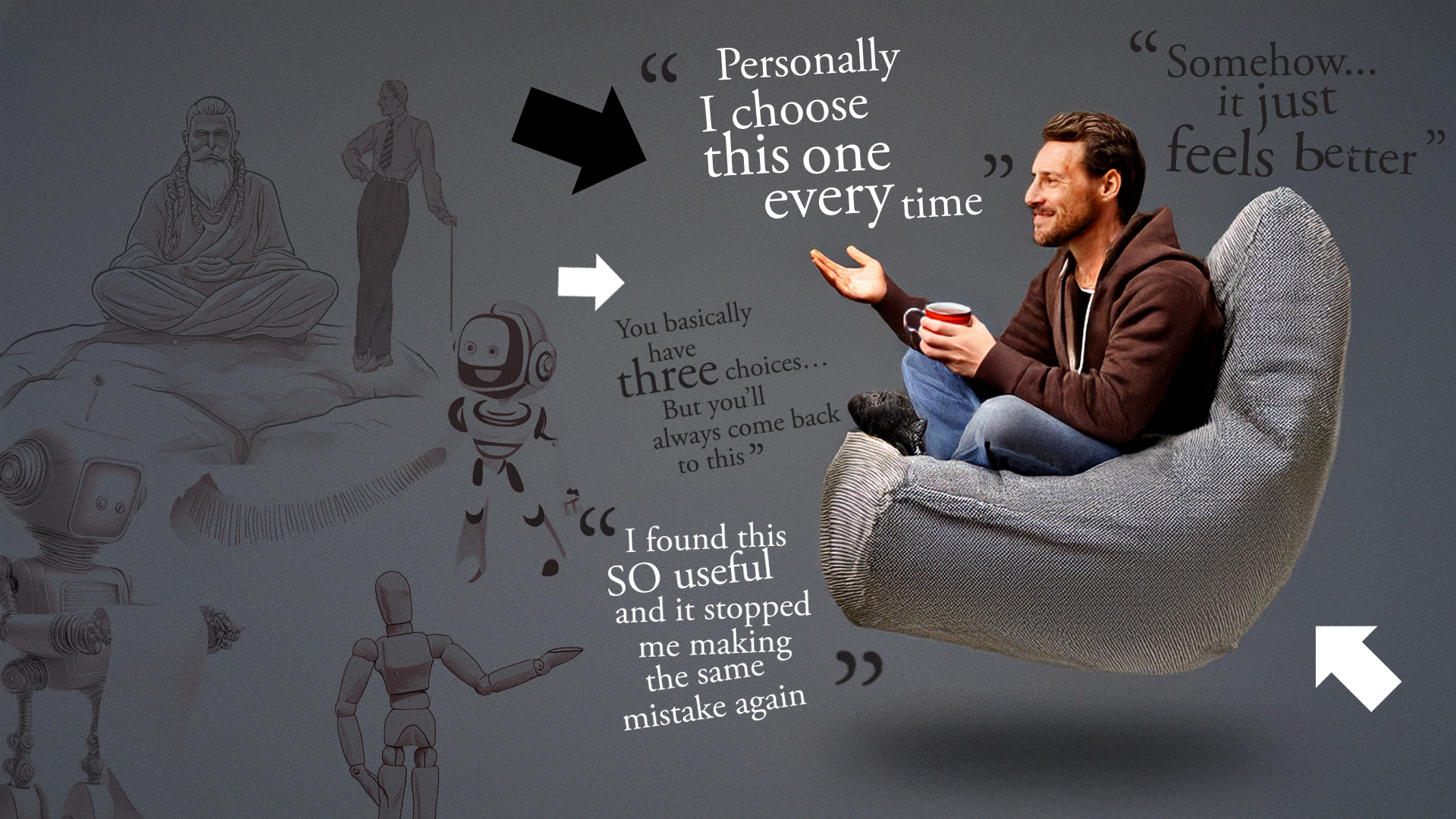
Last year we wrote about How to get your content seen by real people and AI. The answer wasn’t complicated: be useful, be clear, go deep. That still stands today. But there’s been a subtle shift. AI isn’t just offering neat, summarised answers — and occasionally links and references. Now, it’s making confident recommendations. There are two tests modern AI content strategy to pass.
Not all content is created equal
Some is written to be read. Some is written to be found. The new art is in balancing the two. And increasingly it’s not people doing the finding either. These days the first reader of your content is likely to be an AI.
Good content now has to pass two tests:
- Will it get found by traditional search engines and AIs?
- Will humans care enough to read it?
Content has to earn its place in the answer and also earn the reader’s attention once it’s there. It needs to be found by AI and felt by humans! Two different jobs. Two different audiences. One piece of content.
In short, it needs to be both rateable and relatable.
The shifting shape of search
Search hasn’t disappeared, it’s just changed shape. The rise of AEO (Answer Engine Optimization) is changing the rules of modern content. AI systems need to understand and trust your content to surface it directly in its answers, and that same content needs to be expert and human enough to matter once it is.
Think:
- If AI can’t read it, it won’t exist.
- If humans don’t feel it, it won’t matter.
Search used to be about being ranked. Now it’s about being referenced.
Rateable Content
Clear, useful, and structured enough for an AI to understand and surface
Relatable Content
Human, credible, grounded enough for people to trust and act on
Here’s a short field guide based on what we’ve learned so far that may help you navigate this new content conundrum. Use it together with our original article and let us know how you get on.
Enjoy!
An AI content strategy field guide
#1 | Clarity trumps cleverness | rateable
If your content can’t answer a question cleanly, it won’t be surfaced.
AI rewards:
- Clear questions
- Direct answers
- Structured thinking
Tip: Drop the ego and think about the algo!
#2 | Depth beats decoration | rateable
A headline and a viewpoint isn’t enough anymore.
Good content anticipates:
- the next question
- the follow-up
- the “Yes, but what about…”
That’s what gives it weight.
Tip: The more questions you answer, the more chances of being found.
#3 | Decisions over descriptions | rateable + relatable
Most content tells you what happened. Very little tells you why.
People care about:
- the trade-offs
- the thinking
- what almost happened but didn’t
Replace traditional case studies with decision stories. That’s what helps someone else decide.
Tip: Don’t just show the outcome — show the judgement behind it.
#4 | Lived experience matters | rateable + relatable
The internet doesn’t lack information. It lacks perspective.
Share your experience:
- what it felt like
- what surprised you
- what you’d do differently
A good example is The Man in Seat 61. He doesn’t just tell you the route, he tells you what the journey is like.
- which train is better
- where to sit
- what you’ll notice that others miss
That’s not data. That’s judgement. It’s what people trust and what AI increasingly surfaces.
#5 | Write to be quoted | rateable + relatable
Good content gets read. Great content gets repeated.
People remember:
- a line that lands
- a phrase that sticks
- something they can reuse
AI pulls clean, well-formed ideas. Humans remember them.
Replace long explanations with clear, quotable lines. That’s what gets picked up.
Tip: If there’s not a line worth lifting, there’s nothing worth reading.
#6 | Structure for machines, voice for humans | rateable + relatable
Striking a balance between machine learning and human yearning is key. Structure (as much as schema) gets you indexed. Voice gets you remembered.
- Headings, Q&A, clarity → for AI (rateable)
- Content structure: clear sections, logical flow, direct answers (rateable)
- Tone, metaphor, story → for people (rateable and relatable)
Tip: Structure gets you found. Voice gets you felt.
#7 | To be continued…
Share your tips, challenges, or successes. W’d love to hear from you.

What do you think?